

AI Advances in Automotive Software and Self-Driving Cars
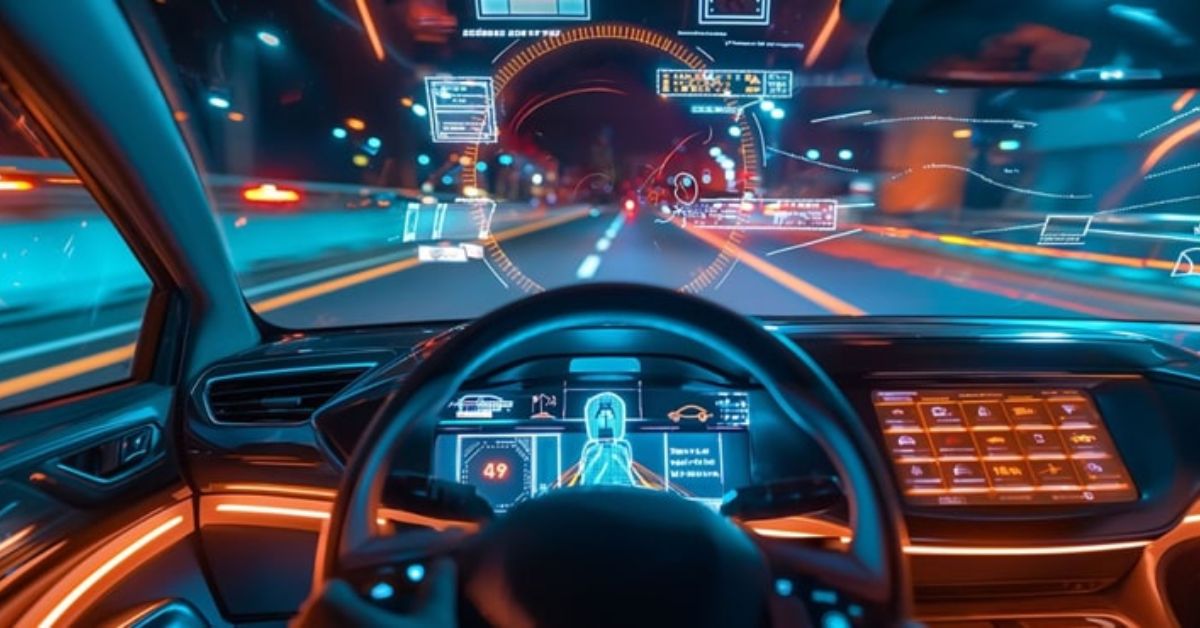
The automotive sector is undergoing a rapid transformation. Modern vehicles are no longer just mechanical machines but intelligent systems powered by artificial intelligence and advanced software.
Today’s cars rely on data, sensors, and algorithms to think, learn, and communicate. This shift is redefining mobility and changing how vehicles interact with drivers and their surroundings.
Automotive software development now plays a critical role. It drives perception, decision-making, and automation, making vehicles safer and more responsive.
According to industry insights, demand for autonomous driving, predictive maintenance, and safety systems is accelerating. This is pushing the automotive AI market toward steady growth in the coming years.
AI and Software Are Driving the Future of Mobility
Despite the opportunities, automakers face several challenges. These include rising cybersecurity threats, complex global regulations, and the need for real-time data processing.
Ensuring safety across millions of connected vehicles is another major concern. Ethical decision-making in AI systems also adds complexity to development.
To overcome these challenges, the industry must move beyond traditional engineering. Advanced software solutions are needed to predict failures, adapt to environments, and improve continuously. This shift highlights the growing importance of software in building smarter and more reliable vehicles.
Shift to Software-Defined Vehicles and Smart Architecture
Modern vehicles are transitioning from mechanical systems to centralized computing architectures. High-performance processors now control multiple functions within the car.
Over-the-air (OTA) updates allow manufacturers to improve vehicle performance remotely. These updates can add features, fix bugs, and enhance safety without requiring a dealership visit.
The rise of software-defined vehicles (SDVs) means that software now shapes performance and user experience. Cars are evolving into dynamic systems that improve over time.
Machine learning also enables personalization. Vehicles can learn driver preferences, adjust settings automatically, and provide a more intuitive driving experience.
Link : US Jury Rulings on Meta, Google Spark Liability Fight
Automakers Transform into Tech-Driven Innovators
Traditional automakers are evolving into technology-driven companies. They are investing heavily in AI, cloud computing, and software engineering talent.
Supply chains are also changing, with a growing focus on software and digital components. Code and algorithms are becoming as important as physical parts.
The industry is now exploring empathetic AI. Vehicles can monitor driver behavior and health to enhance comfort and safety.
Features like mood-based adjustments and biometric monitoring are turning cars into personalized wellness spaces. This marks a new era where technology not only powers vehicles but also enhances the human experience.