
Inside the vision, the controversies, and the promise of a company at the center of regenerative medicine!
People everywhere search for kinder ways to ease pain. Families look for treatments that help them walk with comfort again, lift a bag without fear, or return to a morning routine with steady energy. This longing has grown stronger each year, and the medical field continues to explore fresh paths that rely on the body’s own ability to repair itself. Regenerative care sits at the center of this shift, inviting curiosity and raising questions across the world.
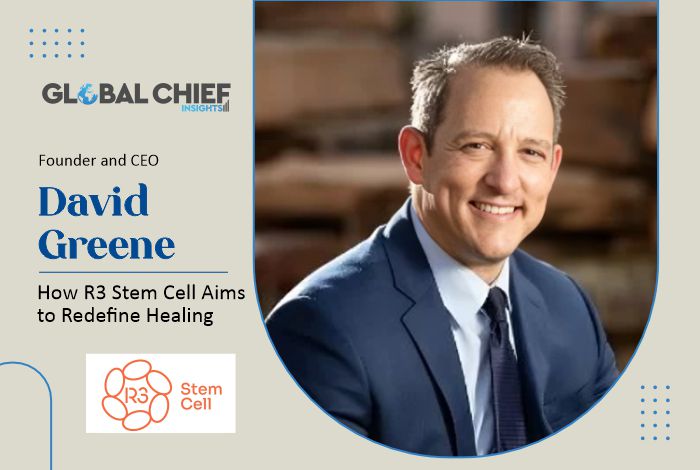
This growing interest eventually connected with a student in a business program who carried both medical training and an entrepreneurial drive. That student was David Greene. His early exposure to orthopedic care gave him an intimate look at how often people struggled with slow healing, heavy surgeries, or treatments that brought relief only for a short while. During a business class, Greene created a plan that explored regenerative therapies and how clinics could bring these treatments to more communities. This plan later became the early spark for R3 Stem Cell, the company he would launch and guide into a global presence.
From Classroom Idea to Expanding Network
Greene’s idea did not stay on paper for long. His belief in regenerative therapies encouraged him to build a clinic network that offered stem cell and biologic treatments for a wide range of conditions. R3 Stem Cell opened its doors with the intention to bring healing that centers on recovery rather than long-term reliance on medication or surgery.
The company presents therapies built around stem cells, exosomes, platelet-rich biologics, and other regenerative materials. These options are offered to people dealing with joint pain, arthritis, chronic inflammation, spinal discomfort, and age-related decline. Many who reach out to these clinics hope to regain mobility, achieve easier movement, or rediscover energy that faded over time.
R3 Stem Cell developed programs known as Centers of Excellence, applying structured protocols to support consistent care across its clinics. Over the years, the company expanded into several countries, including the United States, India, and Mexico. Each location aims to deliver regenerative treatments with a focus on accessibility for people who seek an alternative to traditional interventions.
Therapies That Promise Renewal
The regenerative treatments offered by R3 Stem Cell rely on biologics sourced from tissues such as amniotic or umbilical cord material. These therapies are presented as options that may support the body during tissue repair and encourage recovery for damaged joints, tendons, or other areas that carry pain.
People who arrive at these clinics often describe long battles with discomfort. Some feel tired from years of medication. Others have been told that surgery is their last path. Many hope that regenerative care can give them relief without a heavy recovery period. This emotional weight gives the work of the company a personal dimension, because every patient carries a story. Greene’s mission connects directly with this feeling, because he witnessed how pain can gradually restrict a life.
Rising Questions and Regulatory Attention
As interest in regenerative medicine rose, so did conversations around the science behind it. Many experts studied whether birth tissue products truly contain living stem cells after processing. This question led to debate in the field, because several researchers stated that these materials may lack the living cells required for deep regenerative action. This concern placed pressure on clinics that offered these treatments.
In 2019, the United States Food and Drug Administration issued a public warning to R3 Stem Cell and its affiliates regarding the use of unapproved biologic products for conditions such as diabetes, neurological disorders, and degenerative diseases. The agency also highlighted potential safety concerns when products are delivered intravenously or through invasive methods without regulatory authorization. This step from the FDA encouraged more discussion about the need for clear evidence and tighter oversight in regenerative care.
Greene and his team responded by emphasizing the company’s protocols and the aim to provide high-quality biologics. Supporters of R3 Stem Cell pointed to the increasing number of patients seeking care that focuses on natural healing rather than heavy intervention. The company continued its international operations and positioned itself as a global provider of regenerative options.
Hope, Scrutiny, and the Search for Balance
The story of R3 Stem Cell carries two parallel threads. One is the expanding demand for gentle, recovery-focused treatment that aligns with the body’s own healing rhythm. The other is the call for scientific clarity and consistent regulation. These two forces interact every day in the world of regenerative medicine.
People who consider these therapies often stand at a crossroad. They want relief. They want mobility. They want a life where simple actions feel easy again. At the same time, they must weigh the treatment’s promises against the evidence behind it. For many, this becomes an emotional decision as much as a medical one.
Greene’s company thrives in this space of hope and inquiry. His journey from medical training to entrepreneurship shows how personal curiosity can grow into a large-scale mission. His experience in orthopedics revealed how often traditional tools struggle to offer lasting comfort. His business education encouraged him to see regenerative medicine as a field with potential to reach people who crave healing with fewer barriers.
Understanding the Larger Picture
Regenerative medicine holds a deep appeal. It speaks to a future where healing supports the body rather than forcing it. It encourages the idea that recovery can happen in a lighter, more natural way. Many people turn to clinics like R3 Stem Cell because they want an alternative to surgeries that carry long recovery periods or medication that brings side effects.
At the same time, the field requires strong research, ethical responsibility, and regulatory alignment. Every company offering regenerative therapies must carefully evaluate the science, disclose clear expectations, and communicate openly about risks. People deserve full clarity when they pursue treatment.
The expansion of R3 Stem Cell reflects how rapidly this field has grown. Its story reminds us that medical innovation progresses through trial, refinement, scrutiny, and continuous learning. Greene’s leadership demonstrates a drive to give people new options, even as the company navigates regulatory challenges and scientific debate.
A Journey Still in Motion
The story of R3 Stem Cell continues to unfold. The company stands within a medical landscape that shifts every year as research advances and global standards evolve. Greene remains committed to expanding access to regenerative therapies across multiple countries, offering treatments to individuals who seek relief from chronic pain and degenerative conditions.
People will continue searching for healing that aligns with their needs and hopes. R3 Stem Cell will continue to serve those who look for renewal through biologic therapies. The dialogue between innovation and evidence will continue, urging every participant in the field to act with clarity and responsibility.
In the end, regenerative medicine invites both promise and careful reflection. It offers comfort to many and raises questions for others. The journey of R3 Stem Cell captures the complexity of this moment in medical history, where human need, scientific ambition, and regulatory guidance meet in a space driven by the desire for healing that feels honest, gentle, and full of possibility.