

Walmart to Roll Out Digital Price Labels Across U.S. Stores
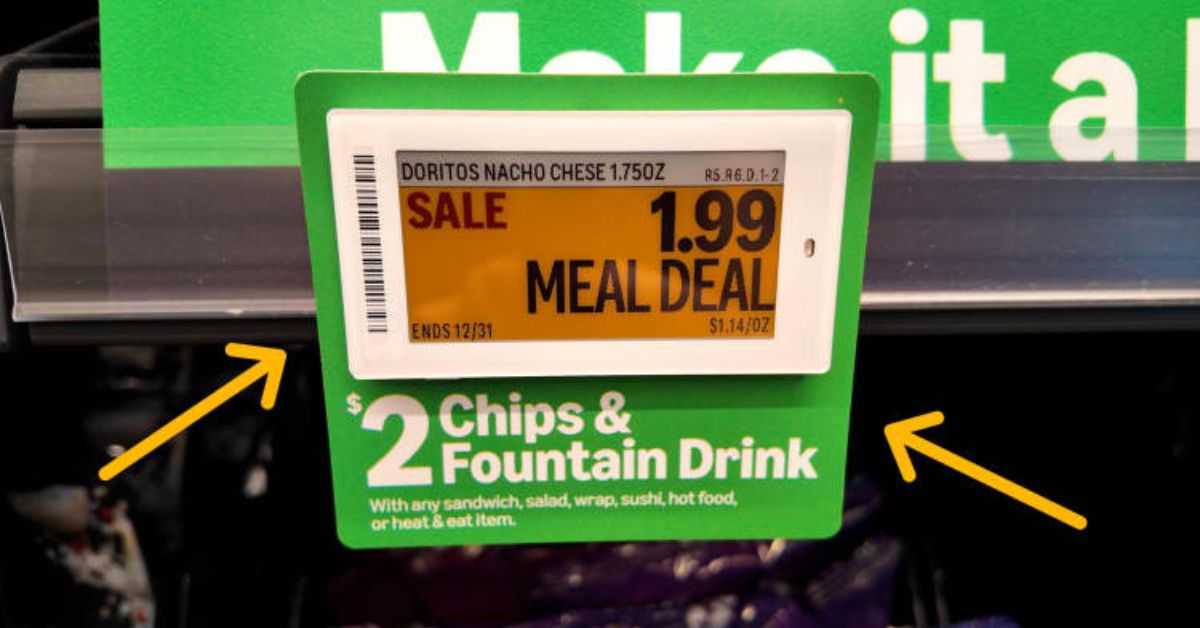
Despite the fact that technology has transformed the American retail, certain aspects of everyday life have remained constant. As an example, the grocery store aisle remains largely similar to how it was more than fifty years ago, with the only slight changes being the introduction of price stickers being substituted by barcodes.
A significant change is taking place, though: electronic price tags. Walmart has been in the lead of the change, implementing digital shelf labels (DSLs) in its stores and intending to go national soon.
The technology is also being tested by other retailers including Kroger. Although DSLs are more efficient and faster to update, people are concerned about the misuse of this technology, such as surge pricing.
Walmart team leader Amanda Bailey reports that digital labels have significantly reduced time spent on manual pricing tasks. This allows employees to focus more on customer service and store operations.
Digital Shelf Labels Are Transforming Retail Operations
Bailey insured that initially, customers will be skeptical but the aim of DSLs is to ease the operations and not to increase the prices. Automation eliminates repetitions and enhances productivity in the store.
Retail expert Scott Benedict opined that, although the worries are fair, it can be exaggerated. Price changes are very responsive in the reactions of shoppers, particularly when they are in the state of inflation causing distrust in the new technologies.
Kroger emphasized the advantages of DSL and mentioned that it offers the correct prices and aligns the in-store and internet-based platforms. This minimizes differences and establishes customer confidence.
Quick price changes would enable retailers to match promotions faster and leave more time to attend to their customers rather than spending time in paperwork such as altering paper labels.
Lawmakers Raise Concerns Over Surge Pricing Risks
Although DSLs are beneficial, other lawmakers feel that they can increase dynamic or surge pricing. The critics caution that rapid fluctuations in prices would enable unhealthy competition with consumers.
Ben Ray Lujan has come up with a bill to regulate such technologies and he has aimed at regulating how large retailers use digital shelf labels.
Val Hoyle shares the same sentiments and demands more stringent laws. Lawmakers caution that in absence of regulation, retailers will exploit the freedom of price.
According to industry analysts, the concept of dynamic pricing is already featured in the airline industry and ride sharing. They claim that abuses can be restrained because of transparency and appropriate regulation and the efficiency gains can be maintained.
Read : APAC Privacy Rules Reshape Marketers’ Data Strategies
Balancing Innovation, Trust, and Consumer Protection
Technology leaders indicate that DSLs aim at addressing the issues of operation, rather than changing the prices only. They reduced the manual errors, improved the accuracy of pricing and ensured cross-platform consistency.
Another benefit is mentioned by experts, who state that real-time markdowns can reduce food waste. Walmart saves retailers and shoppers and simplifies inventory.
Trade organizations, including the National Retail Federation, support the adoption of digital shelf labels (DSLs). They argue that existing laws already protect consumers.
Finally, consumer trust is the key to success of DSL. Innovation can be made to make shopping better and not worse through open communication, transparency, and fair prices.