

How Amazon’s Data Centers Achieve 7x Water Efficiency
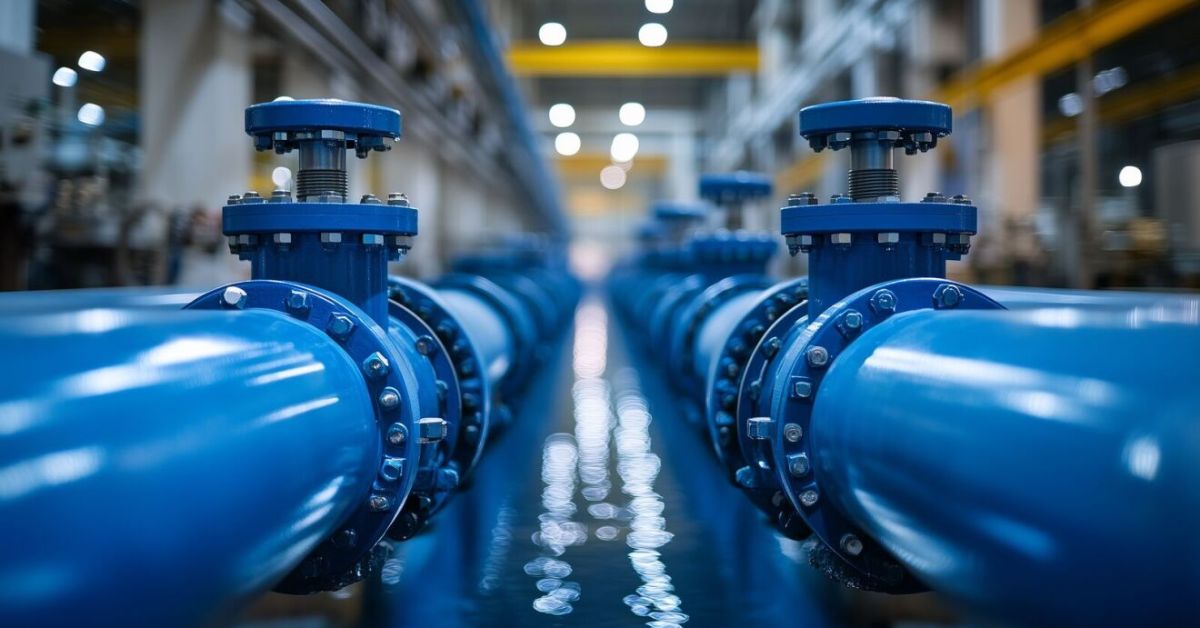
As the rapid expansion of artificial intelligence drives demand for larger data centers, technology companies are facing growing scrutiny over their environmental impact. Water consumption has become one of the biggest concerns, pushing major operators to prove they can support AI growth without exhausting local resources.
Amazon has responded with ambitious sustainability claims, reporting a 52% improvement in water efficiency over the last five years. The company also says its global data centers are now seven times more water-efficient than the industry average.
According to Amazon, these gains result from a combination of advanced cooling technologies, including free air cooling, evaporative cooling, and the use of higher operating temperature thresholds that reduce the need for additional water.
Industry analysts believe these disclosures highlight a broader shift in the AI era. Sustainability metrics such as water usage are becoming key competitive factors, with transparency and environmental stewardship now standing alongside performance and innovation.
How Amazon Is Improving Data Center Water Efficiency
Amazon reports that its global data center operations used just 0.12 liters of water per kilowatt-hour (L/kWh) in 2025, significantly lower than the industry average of 0.84 L/kWh. Among other hyperscale providers, Microsoft reported 0.27 L/kWh, while Meta and Google recorded higher usage levels.
One of Amazon’s primary strategies is the use of free air cooling, which handles cooling requirements around 90% of the time. Instead of relying on water-intensive systems, the process draws in outside air to absorb heat before releasing it back into the environment.
During hotter conditions, the company switches to evaporative cooling. In this method, water passes through an absorbent medium while airflow encourages evaporation, naturally lowering temperatures and reducing energy demand.
Amazon has also redesigned its server infrastructure to withstand higher operating temperatures. After years of optimization, the company increased the operating threshold of many facilities to 85 degrees Fahrenheit, reducing the amount of cooling water required while maintaining system reliability.
Water Reuse and Sustainability Goals Shape the Future
Beyond reducing consumption, Amazon is investing in water replenishment initiatives. The company says it returned three gallons of water to local communities for every four gallons used during 2025 and is now 75% of the way toward its goal of becoming water positive by 2030.
Many Amazon data centers now use reclaimed water sourced from wastewater treatment facilities instead of drinking water. The company currently operates 130 sites using reclaimed water, with 26 facilities relying on this method exclusively, while also supporting local community water-recycling projects.
Analysts acknowledge that Amazon’s engineering improvements are meaningful, although water efficiency measurements involve several nuances. Metrics such as Water Usage Effectiveness (WUE) can vary depending on whether operators account for electricity generation or differentiate between reclaimed and potable water.
Even so, experts note that Amazon’s approach appears balanced. The company’s cooling methods not only reduce water usage but also improve energy efficiency, with its Power Usage Effectiveness (PUE) remaining highly competitive across the industry.
Read : Munich Google Ruling Could Reshape the Future of Insurance
AI Infrastructure Is Driving a New Sustainability Race
While Amazon’s achievements are significant, analysts point out that many of the technologies involved are becoming standard practices across the industry. Microsoft is investing in closed-loop cooling systems, Google is expanding reclaimed water usage with AI optimization, and Meta has long relied on outside-air cooling techniques.
Location also plays a critical role in determining water efficiency. Climate conditions, regional water availability, and the growing energy demands of AI workloads all influence how companies design and operate their facilities.
Transparency is quickly becoming another major area of competition. Technology companies increasingly publish water-consumption data to reassure regulators, local communities, and enterprise customers that sustainability remains a priority as AI infrastructure expands.
The growing focus on disclosure comes at a time when communities and governments are imposing stricter oversight on data center development. Experts believe the future of AI infrastructure will depend not only on engineering innovation but also on responsible resource management.