

Why Data Scientists Must Master LLMs and AI Agents ?
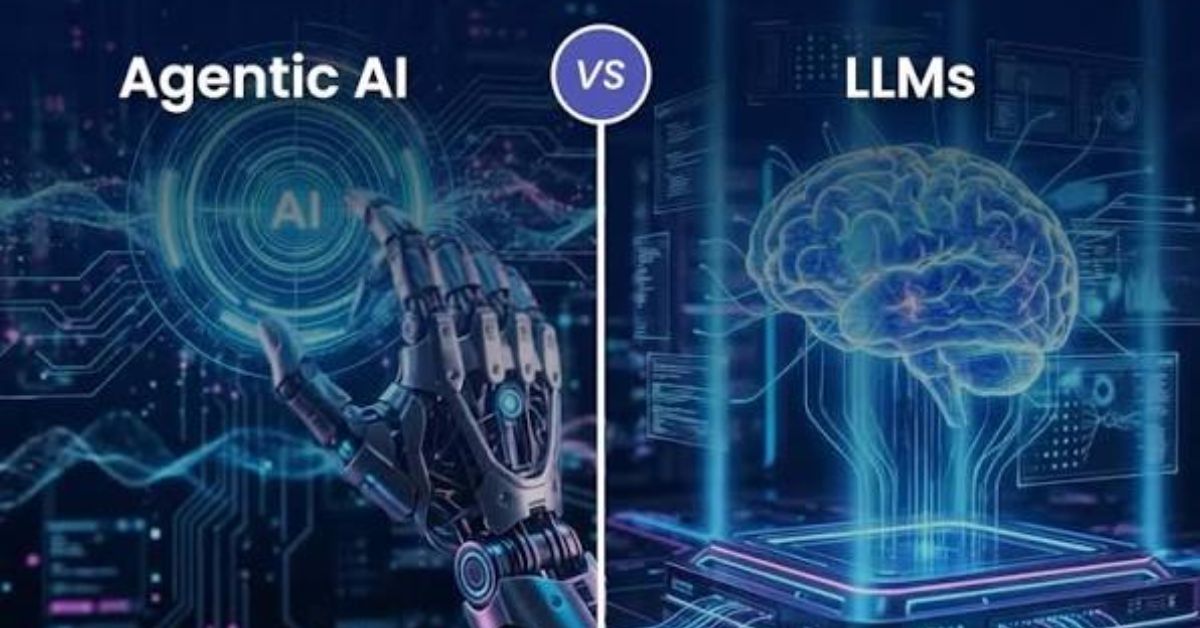
Most data scientists do not need to become LLM engineers. However, understanding how retrieval works, evaluating the reliability of LLM outputs, and knowing when fine-tuning is unnecessary can help them contribute effectively to AI projects and strategic discussions.
The level of GenAI knowledge required often depends on a team’s size, structure, and technical responsibilities. In larger organizations, conceptual understanding may be enough, while smaller teams may expect data scientists to support implementation and testing.
A practical baseline for almost every data scientist is understanding Retrieval-Augmented Generation (RAG). Even without building a system from scratch, knowing how retrieval pipelines work makes it easier to identify issues, collaborate with engineers, and improve AI applications.
As LLM adoption accelerates across industries, professionals who can bridge the gap between business objectives and AI capabilities will have a competitive advantage in the evolving data science landscape.
Understanding the LLM Foundation Every Data Scientist Needs
Why RAG Is the Best Starting Point
RAG, or Retrieval-Augmented Generation, combines an LLM with an external knowledge base, allowing the model to access up-to-date or private organizational data without retraining. This approach addresses common limitations such as outdated training data and lack of internal business knowledge.
For many companies, the first practical GenAI use case involves answering questions about internal documents, customer records, or company policies. In most of these scenarios, RAG provides a faster and more cost-effective solution than model fine-tuning.
Learning the basics of embeddings, vector databases, chunking, and prompt templates helps data scientists understand how these systems work and where they may fail. This knowledge supports better testing, debugging, and collaboration with ML engineers.
Even a simple hands-on project, such as building a document search chatbot, can provide valuable experience with the building blocks of modern enterprise AI applications.
Build a Strong Foundation Before Exploring Agents
For beginners, RAG should come before AI agents. Many agentic systems rely on retrieval mechanisms, and understanding retrieval removes much of the complexity involved in debugging and improving agent behavior.
RAG also introduces core concepts such as context management, chunking strategies, and information retrieval, all of which become increasingly important as AI systems grow more advanced.
By comparison, AI agents involve orchestration logic, tool integrations, state management, and multi-step reasoning. These additional layers create a steeper learning curve and can overwhelm newcomers without a solid foundation.
A practical learning sequence for data scientists is: prompt engineering → RAG → tool integration → single-agent systems → multi-agent architectures. Each stage builds naturally on the previous one and strengthens overall AI literacy.
A Practical GenAI Roadmap for Modern Data Scientists
Focus on Real-World Projects and AI Literacy
A well-rounded GenAI roadmap starts with understanding how LLMs work, including concepts like context windows, tokenization, hallucinations, and inference limitations. This knowledge creates realistic expectations before using advanced tools.
The next stages involve mastering prompt engineering, learning retrieval systems, and developing evaluation methods that measure AI performance. Testing and validation are especially important because unreliable outputs can create business risks.
Data scientists do not necessarily need to become production AI engineers. However, understanding concepts such as monitoring, model versioning, and LLMOps helps them collaborate more effectively with engineering teams.
One of the best beginner projects is a small-scale RAG application that answers questions from a limited document collection, such as HR policies, FAQs, or product documentation. These projects provide practical portfolio experience while reinforcing key GenAI concepts.
Conclusion
Data scientists do not need to master every aspect of LLM engineering to stay competitive. What matters most is developing enough practical knowledge to evaluate AI systems, collaborate across teams, and identify the right use cases for GenAI.
Understanding prompt engineering, RAG, and evaluation frameworks creates a strong foundation before moving into more advanced topics like AI agents and LLMOps. Rather than building every solution, successful data scientists will focus on making informed decisions about when and how AI should be used.
FAQs
1. Do data scientists need to become LLM engineers?
No. Most data scientists benefit more from understanding LLM concepts and evaluation methods than from becoming full-time LLM engineers.
2. What is the best GenAI skill for beginners?
RAG (Retrieval-Augmented Generation) is often the best starting point because it solves many real-world enterprise AI problems.
3. Should I learn AI agents before RAG?
No. Learning RAG first provides the retrieval and context management foundation needed to understand and build AI agents effectively.
4. What type of LLM project should data scientists build first?
A document question-and-answer application using RAG and a small internal or synthetic dataset is an ideal beginner project.