

New Chip Helps Tiny Robots Navigate Complex Spaces
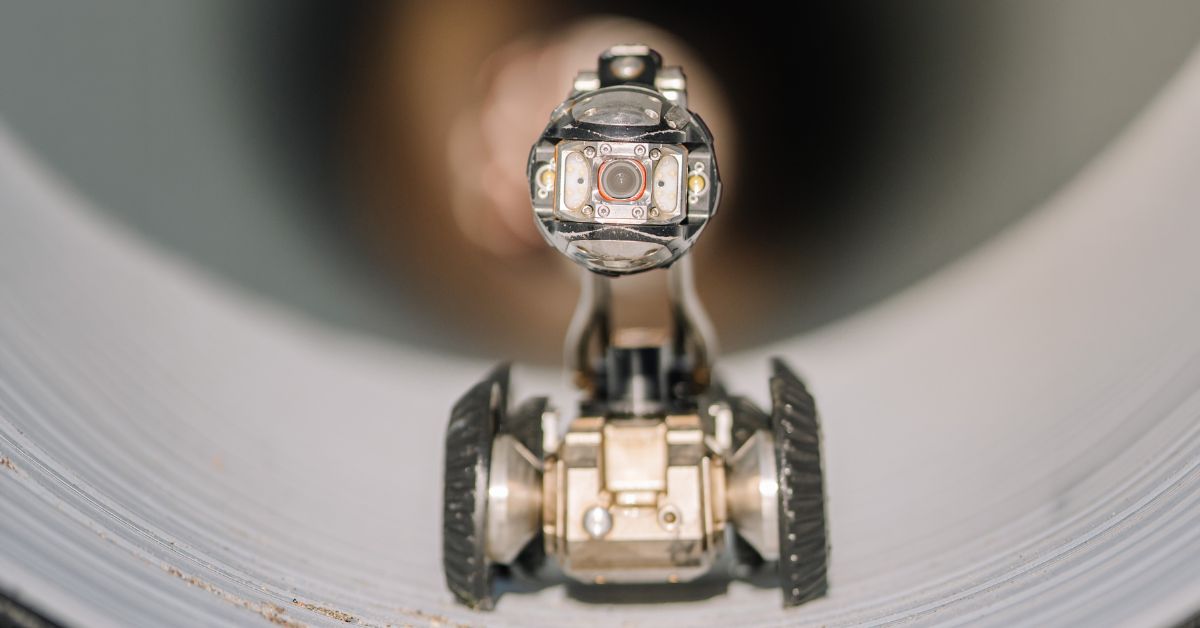
A new chip developed by MIT researchers could help tiny, low-power UAVs avoid obstacles as they zip around tight corners inside industrial HVAC systems to detect gas leaks.
The chip enables small autonomous robots and other battery-limited devices to construct detailed 3D maps of their surroundings in real time while using only about as much power as a single LED.
A robot can use these detailed maps to plan safe, collision-free paths to reach its destination efficiently. Typically, generating such detailed maps requires power-hungry systems and large memory resources to build and store 3D representations of obstacles.
The MIT team took a different approach by combining an energy-efficient mapping algorithm with specialized hardware that accelerates processing while minimizing memory and power consumption.
Revolutionizing 3D Mapping With Ultra-Low Power
This advanced system-on-a-chip consumes only about 6 milliwatts of power, far less than conventional mapping systems. Its low-power operation also makes the chip ideal for lightweight augmented reality headsets used in educational medical simulations, repair work, and assembly applications.
“This paper showcases a key example of how algorithm and hardware co-design can push energy efficiency,” said Vivienne Sze. She explained that the chip can store large maps in minimal space while maintaining remarkable energy efficiency.
The research was led by MIT graduate students Zih-Sing Fu and Peter Zhi Xuan Li, along with Sertac Karaman, and was presented at the IEEE Very Large-Scale Integrated Circuits Symposium.
Gaussian Mapping Improves Efficiency and Accuracy
Traditional robot mapping relies on 3D pixels, known as voxels, which demand heavy computation and memory usage. Instead, MIT researchers used ellipsoid blobs called Gaussians to represent obstacles more efficiently.
These Gaussians adapt in size, shape, and thickness, making them more effective than rigid voxels at modeling curved and complex surfaces. The approach captures both obstacles and surrounding free space, allowing robots to navigate safely while significantly reducing memory requirements.
The system-on-a-chip, called Gleanmer, uses MIT’s GMMap algorithm to efficiently build these compact 3D Gaussian-based maps. Instead of processing depth images multiple times, the chip creates highly accurate Gaussians in just one pass.
The algorithm compares each pixel only with neighboring pixels rather than every pixel in the image, dramatically reducing processing load. “At any point, we only need to store a few pixels in memory,” said Li, highlighting the algorithm’s efficiency.
Read : Bath & Body Works Growth Boosts Ulta Beauty Deal
Gleanmer Could Transform Robotics and AR Devices
As robots move, they often view the same object from different angles, which creates overlapping Gaussians in the map. To solve this, researchers developed a fusion technique that merges overlapping Gaussians directly without revisiting raw pixel data.
This innovation significantly cuts memory use and boosts energy efficiency. The chip stores active Gaussian data in fast on-chip memory close to its computing units, reducing the need for power-intensive off-chip storage. Researchers tested Gleanmer using diverse 3D environments and live data streamed from an iPhone camera.
The chip generated detailed 3D maps in real time while consuming only 6 milliwatts of power. It required just 2.5% of the energy used by the best existing mapping chips and reduced path-planning energy needs by about 80%.
MIT researchers plan to improve efficiency further by moving processing units closer to sensors and exploring new applications like blueprint analysis for AI systems. “Real-time 3D mapping has been the missing piece for small autonomous systems,” said Karaman, emphasizing Gleanmer’s potential for drones, AR glasses, and next-generation robotics.